Dave's Cheese Notes: Taleggio
Back to Dave’s Cheese Pages.
This one is strictly produced in the Lombardy or Piedmont regions of Italy. It’s named after the Val Taleggio valley, which is known for soft cheeses.
It’s made in square blocks and traditionally washed with seawater sponges and aged in caves. Authentic stuff!
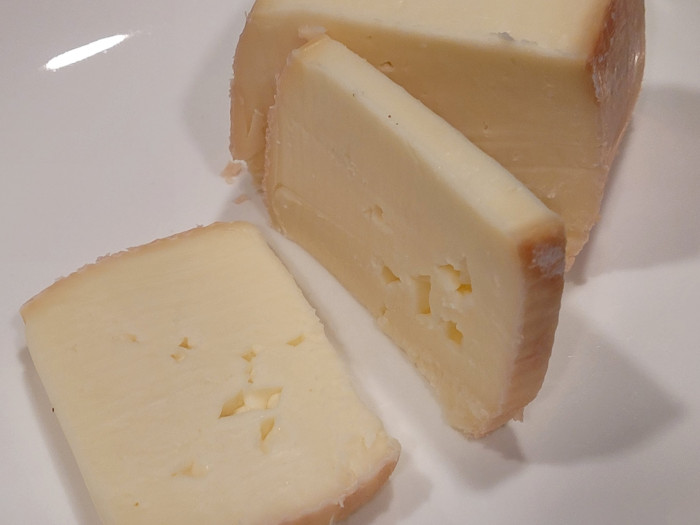
Since I purchased this from the Murray’s counter at my Kroger grocery store, I believe this Taleggio was made by Ciresa, which appears to be a pretty legit and proper maker of these cheeses.
My wedge had a dull orange rind. The smell is unique. If I told you, "This lived in a cave and was washed once a week with a seawater sponge," you would have no trouble believing me. Also it’s true.
Actually, I didn’t find the smell to be strong per se. Well, maybe I’m just getting used to these cave odors. My wife came into the kitchen while I was taking the picture above and wanted nothing to do with my cheese adventure.
The taste is pretty mild. I was expecting a very soft cheese like a Brie, but this was a bit firmer than that. "Rubbery" sounds like an insult, so I’ll just stick with "slightly firm". Somewhere between Mozzarella and Brie?
I like this one quite a bit. The stronger flavor means it holds its own against a multi-grain cracker. But it wasn’t super strong. Definitely not offputting.
It’s a rich food, so I don’t feel the need to eat a ton of it to be satisfied (though there’s a temptation to get "just one more slice" from the block).
My cheese book guy Steven Jenkins (Cheese Primer, 1996) has quite a lot to say about this cheese and it is referenced a number of times in the book as an example of washed rind cheeses, as one of three cheeses he picked for a "Taste of Italy" plate, and given a multi-page writeup.
I thinly sliced off the rind, but since I cut so close, some remained. I liked those bites the most, so I’ll definitely be leaving the rind on my future slices.
Should we eat these rinds?
So now that I’m taking this whole "amateur cheese-enjoyer" thing a little more seriously, I’m starting to have questions.
Long ago, when I was a less adventurous eater, I used to always cut the rind off. In fact, I would err on the side of removing all of the rind, even at the cost of losing some cheese!
But now that I’m okay with eating whatever so long as it tastes good, I’m curious what the general rules are with cheese rind.
I thought this was quite helpful: https://www.bhg.com/recipes/how-to/cheese-rind/
Can you eat them?
Kathleen Serino often hears the question, "Can you eat cheese rind?" The short answer is yes… "All cheese rinds are food safe, otherwise they could not be sold in the U.S."
Should you eat them?
Suzanne Fanning … uses a "peel test" to determine if a cheese rind is suitable for eating. If the rind comes right off, you can leave it off.
What is the rind of a cheese, anyway?
Serino explains, "A rind develops thanks to the cultivation of beneficial bacteria (we call them cultures) that are introduced to the cheese in various stages to help develop the deliciousness and distinct flavors within. Salt application encourages the formation of a crust as well by regulating the growth of microbes (and keeping the unwanted ones at bay)."
You can chew the wax around Gouda or the cloth around a wrapped cheddar, but you probably won’t want to eat too much of it.